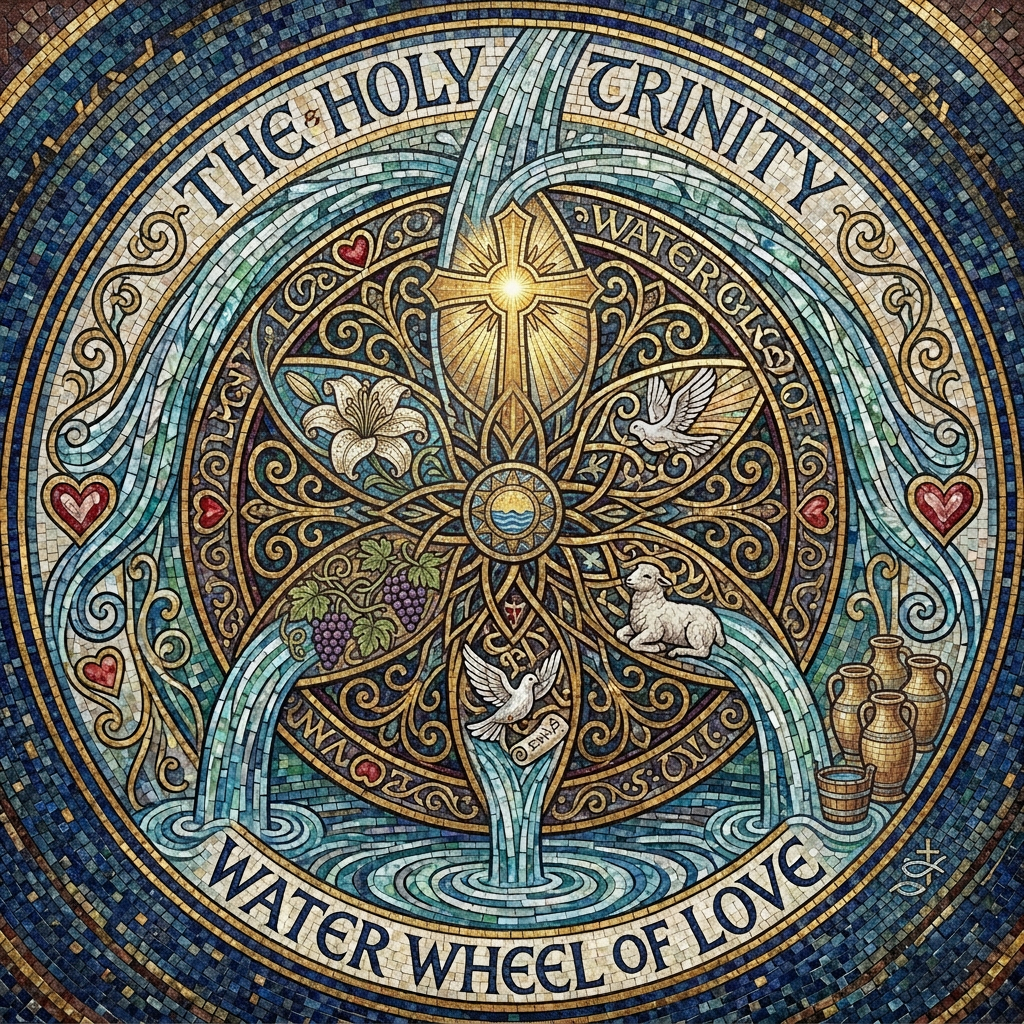
It has been a while since I have been able to sit down and write anything for this blog. Life can get busy for a bishop now and again. Recently we celebrated the Solemnity of the Holy Spirit and I was the homilist. Every time we preach on the Trinity we homilists are challenged to find words to put on a doctrine that is beyond words. I find that everything that is going on in our world affects how I approach a homily on such a knotty and onerous topic. As I was thinking about this blog and my neglect of it for a time, I decided to share my homily as something that seems relevant to the rest of my sharing. So, here it is. (If you would prefer to listen to it, you can go HERE)
The Grace and peace of Christ, the love of God, and the companionship of the Holy Spirit be with you always. (And also with you) Today we are celebrating the solemnity of the Most Holy Trinity, and I am aware that I have little idea of what I am talking about when I proclaim God as Trinity. I am comforted by realizing that with faith it does not matter that I do not understand it, but only that I live with it every day. Knowing God is a matter of encountering the “Something” beyond us and so it is a matter of heart, not of intellect. The best we can do to describe the Mystery of God is to constantly stretch our ideas about God. We do that at Emmaus by using multiple names for God and there is no end to the ways we can name God. Always remember that God is indescribable. Since we can let go of our attempts to understand the dogma of the Holy Trinity, we can instead focus on the “so what?” How does describing God as a relationship of love and self-giving affect the way we live our lives as Christians?
Trinitarian language is at the core of our faith and of our liturgical prayer, as demonstrated by the greeting we make each Sunday at the beginning of mass. We heard this greeting in our second reading today and see that a glimmer of this idea about God as Trinity was present in the early church. When I think of my faith in the Trinity I sometimes reflect on my relationship with electricity. I really don’t understand it, but I live with it every day, and I notice when the power goes out.
Catherine Mowry LaCugna, who wrote the book, God For Us, called the Trinity a practical doctrine with radical consequences for Christian life. In other words, the Trinity is not just something we talk about; it is something we are invited to live. It names our experience of God’s life with us and teaches us what love, communion, and self-giving look like.
The Gospel gives us the heart of it: “God so loved the world.” God loved us before we ever thought to love God. God moves toward us, reaches for us, saves us in Christ, and remains with us in the Holy Spirit. The Trinity reminds us that the deepest truth about God is not isolation, but relationship; not distance, but nearness; not fear, but love. It gives us a structure for understanding not just our relationship with God, but our relationships with each other and with all of creation.
One image that helps me is a metaphor from St. Bonaventure: the Trinity as a flowing water wheel, always pouring out and receiving, always moving in a circle of love. I find this image exciting. It is a beautiful way to imagine God—not static or closed in on Godself, but alive, generous, and always giving. Love is constantly received and constantly shared. That, Bonaventure suggests, is the very rhythm of God. We experience the giving away of love as the pattern for all of reality. And the good news is this: we are invited into that flow of love. Jesus says, “so that where I am, you also may be.” We are not standing outside, trying to earn our way in. We are being drawn into the life of God. We receive that love, and we are sent to share it—with one another, with our neighbors, and with a world that is hungry for mercy and hope.
If God is relationship, then our lives of faith must also be about relationship. The Church is meant to be a living sign of that divine love: a community where people are welcomed, cared for, respected, and strengthened. The love we know here should spill outward—into our homes, our neighborhoods, our workplaces, and the wider world.
“God so loved the world.” That is the good news we need to hear again and again. God’s love is not something we control or achieve. It is gift. It comes before us. In many ways, infant baptism shows us this beautifully: before a child can choose God, God has already chosen the child. That is true for all of us. God has decided to be for us, and nothing could be more hopeful than that.
So the Trinity is not only a mystery to admire; it is a way of life to enter. We are being gathered into communion with God and with one another. The God revealed in Jesus is not distant or indifferent, but for us, with us, and among us. And if that is who God is, then that is who we are called to become: people of communion, compassion, justice, and peace.
In the Trinity, unity does not erase difference, and love does not diminish anyone. In God there is perfect communion and perfect dignity. That means our Christian life must resist every form of domination, exclusion, and indifference. To live a Trinitarian faith is to live in harmony with others and to honor the sacred worth of every person.
We will never fully explain the mystery of God, but we can live it. We can become, as Church, a reflection of the Holy Trinity: a people shaped by love, open to one another, and sent into the world with courage and compassion. On this Trinity Sunday, may we rejoice that we are loved by the God, welcomed by the Beloved One, and accompanied by the Holy Spirit—and may that love overflow through us for the life of the world.
Where have you seen God’s love this week? What does love ask of us?

